Colour change occurs when a gemstone appears one colour under a light source like natural daylight and then a completely different colour when viewed with another light source like candlelight or an incandescent light source.
When you think about the history of colour change gemstones, originally, colour change was defined as the difference people saw between daylight and candle or oil lamps, but as incandescent lights became more common, the effect of using incandescent light sources was seen as being very similar to comparing daylight with candle light.
These days the standard method for detecting colour change in colour change gemstones is to simply compare the difference between what you see in natural light such as outside daylight and other light sources.
The first step is to determine the underlying base colour of the gemstone, this is usually done by viewing the gemstone in outside daylight or by using a daylight equivalent white light source when outside daylight is not available like when you’re indoors or at night for example.
Often you will find that a daylight equivalent white light source will produce the same or a very similar colour in the gemstone to outside daylight.
Once the underlying base colour of our gemstone is determined, we then look at what colour, our colour change gemstone changes to under an incandescent light source or when using another light temperature.
In the majority of cases the colour change will be seen using an incandescent light source, but it may also be another light source that will produce the colour change in the gemstone.
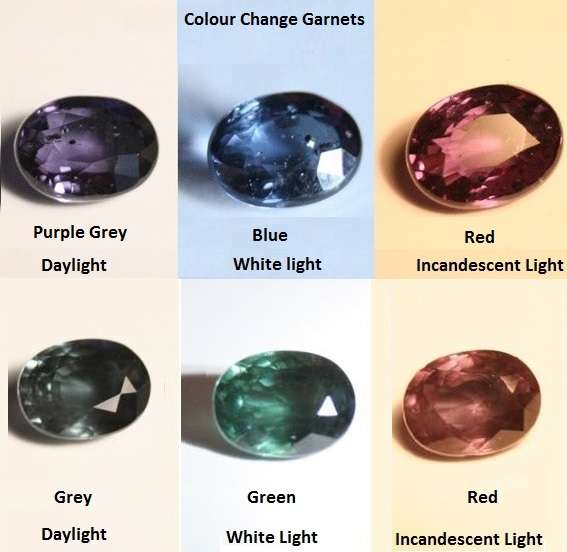
As an example of this you can see below some nice examples of colour change Garnets, if we compare the colours displayed in outside daylight to what is then seen when under a cool white light source, they are showing completely different colours.
In the top row, you can see it is a very clear purple grey colour when viewed in daylight, which then changes to blue under cool white light.
In the bottom row, the Garnet appears grey when viewed in daylight and then changes to green under cool white light.
Both Garnets then change again to red when exposed to a warm incandescent light source!
So in these examples, three different light sources produced three completely different colours in these gemstones, which is why it is important to try different light sources when detecting colour change in gemstones.
This change in colour seen in the gemstone is caused by a combination of our own eyes, the light source we use and the chemical structure of the gemstone itself.
Within each gemstone is a combination of “sub” colours that make up its primary underlying base colour.
With colour change gemstones, using different calibrated light temperatures has the effect of isolating one of the “sub” colours that are in the stones overall base colour, which then has the effect of allowing that “sub” colour to become the dominant colour of the gemstone while it is being illuminated with that calibrated light source.
To see an example of this, these Tourmaline crystals have an underlying base colour of blue and pink, but when they are exposed to an incandescent light source, notice how I am able to isolate a small section of each of the Tourmaline crystals underlying base colour and display a greenish yellow colour from the blue Tourmaline crystal and orange from the pink Tourmaline crystal, giving them a bi-coloured Tourmaline look, just by shining a focused incandescent light source on them!
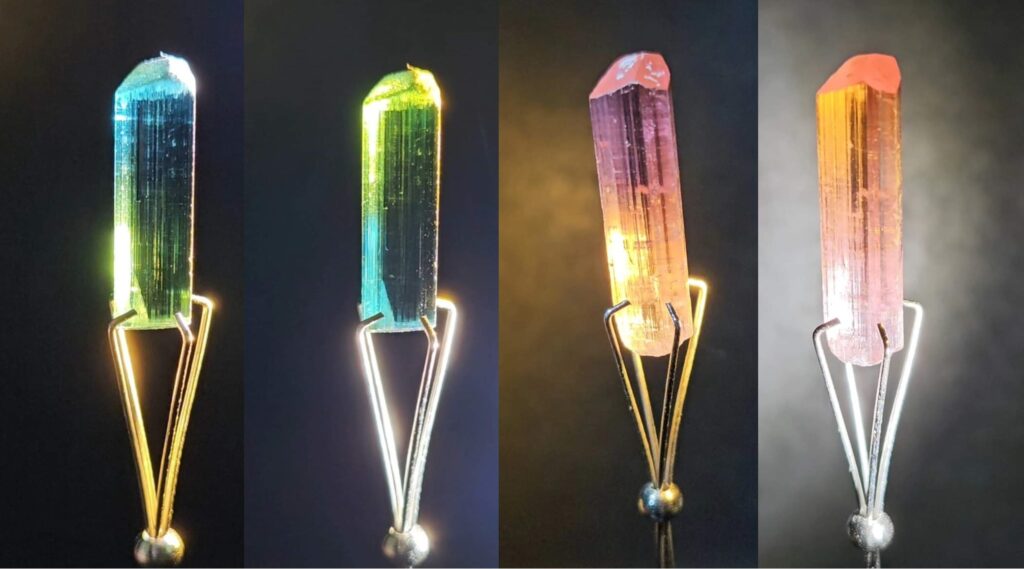
The science behind this colour change effect is the underlying “sub” colours that are a part of the stones primary base colour are being isolated with our calibrated light temperatures, so when a colour change gemstone is exposed to different light temperatures, they will appear different colours under different light sources.
In the majority of cases just using a simple Gemmology flashlight will help you identify colour change in most gemstones, but there are some instances where it may not be enough and you could miss some gemstones that exhibit this colour change effect.
To cover all your bases when identifying colour change gemstones, apart from viewing the gemstone in outside daylight you will also need to use light sources that allow you to view it at pre-set calibrated light temperatures…
Calibrated Light Temperatures for Identifying Colour Change Gemstones:
Cool white light 6500 Kelvin:
This colour temperature simulates daylight on an overcast day and is the RBG White light reference point and is considered a cool temperature
Noon Mid-day Daylight equivalent 5000-6000 Kelvin:
This temperature simulates noon midday daylight and is a great alternative to using outside daylight when it’s not available when indoors or at night.
5000K to 6000K is considered to be in the neutral daylight range with most gemmology lamps sold pre-set at 6000K for grading purposes.
Warm Incandescent light 2700 – 3500 Kelvin:
This is considered a warm light temperature, with most gemstones showing colour change within this temperature range.
Candle and Oil Lamp equivalent 1500 -2000 Kelvin:
This simulates candle and Oil lamps and is considered to be a very warm temperature. If a gemstone has any colour change potential at all, it will change colour within this colour temperature range!
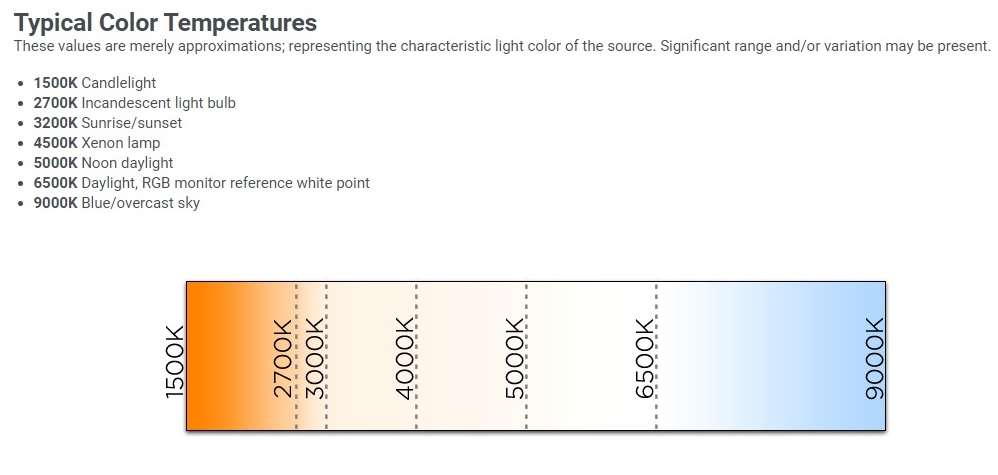
Daylight equivalent around 5000K – 6000K will highlight the cooler blue, green and sometimes purple colours in gemstones, while warm incandescent light around 2700-3500K will bring out the red, orange or yellow colours within the gemstone.
Candle light was the original incandescent light source and it was from candle and oil lamps that colour change in gemstones was first observed.
Candle light and Oil Lamps have a colour temperature of around 1500-2000K and are an ideal alternative to an incandescent light source, so you do not miss seeing the colour change in gemstones, which is why it worth having a light source that displays this colour temperature.
At the other end of the temperature scale, most gemstones will be almost blue at 5500K while others will not become blue until 6500K and the reason for these variances in colour change is because every gemstone from every mine is different…
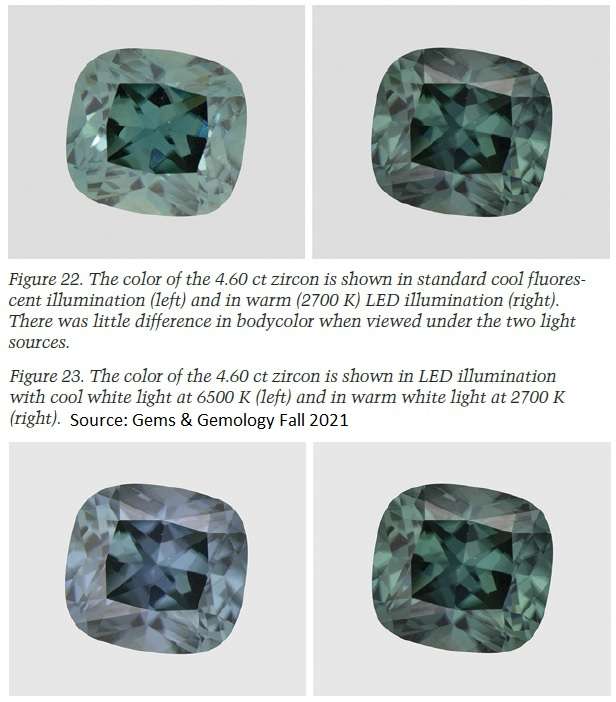
As an example of this take a look at this rare blue to green colour change Zircon.
It remained an overall green colour when viewed with a cool 5000K fluorescent light source and a warm 2700K light source.
It wasn’t until it was viewed in outside daylight or with a cool 6500K LED light source that it changed its colour to blue and then changed again to green when exposed to a warm 2700K LED light source.
So it took outside light or a cool 6500K light source before it would display its blue colour!
Other Things to Consider with Colour Change Gemstones:
Faceted gemstones are usually small, so actually seeing the colour change clearly can be a challenge in some cases.
Using a darkened environment or dark viewing box will reduce outside light and will avoid the colour displayed from being diluted from other light around the gemstone.
If your eyesight isn’t as good as it used to be, viewing the gemstone through your phones camera while magnified, can help you clearly see what colour the gemstone is displaying under each light source.
Colour change in gemstones is also effected by the distance the light source is from the stone as well as the angle of the light to the stone.
The light source should ideally be a focused light source and be 2 to 3 inches from the stone, with the strongest change occurring when the light is directed across the table of a faceted gemstone.
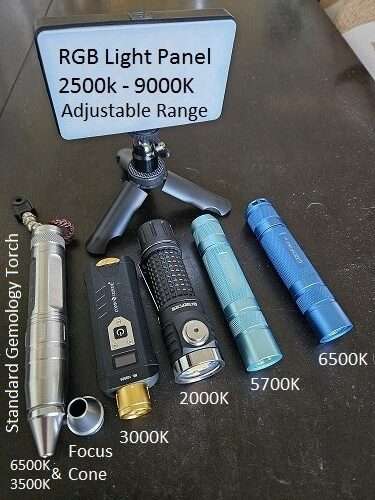
I have had great success using LED torches/ flashlights that have been calibrated to pre-set colour temperatures and ideally have a focus cone you can attach to the end of the torch / flashlight, this is particularly useful to direct the focused light into darker stones.
RGB Light panels that have adjustable light temperatures from 2500 to 9000 Kelvin, are great for background lighting but are not a focusable light source, so the best results will occur when they are used in conjunction with a focused light source as above.
The majority of the light sources I use are LEDs in both cool and warm colour temperatures, but also having a warm incandescent light source that uses a halogen bulb could be a useful alternative light source.
Below are some examples of pre-set calibrated light sources I have used with great success in conjunction with a darked environment to identify colour change in gemstones.
Suggested Light Temperature Combinations to Try When Detecting Colour Change in Gemstones:
Actual mid-day outside Daylight then compared to a warm incandescent light source.
Daylight equivalent light source 5000-6000K then compared to warm incandescent light 2700 – 3500K or Candle light equivalent 1500-2000K
Cool white light 6500K then compared to warm incandescent light 2700 – 3500K or Candle light equivalent 1500-2000K
Cool white light 6500K then compared to Daylight equivalent light source 5000-6000K
Examples of Calibrated Light Temperatures Showing Colour Change:
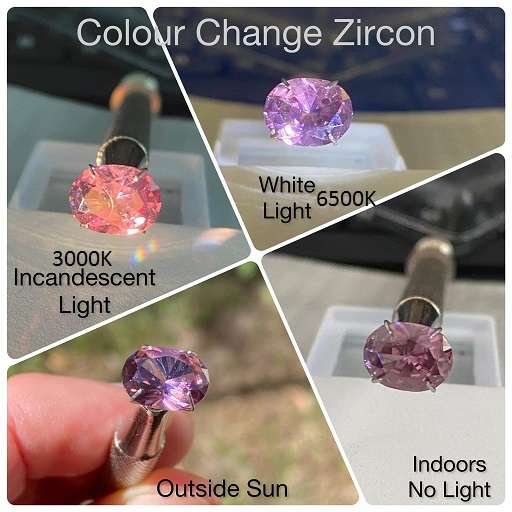
This Colour change Zircon shows the differences in colour when viewing the gemstone in outside daylight – Maroon, Cool white light 6500K – Purple and Incandescent light 3000K – Raspberry Red.
The end result was three distinct colours that where isolated and displayed with these different colour temperature light sources.
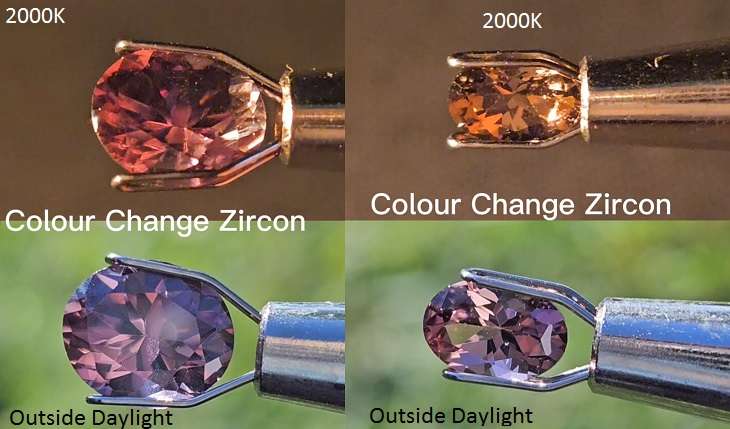
As another example of colour change, the following colour change Zircons both display a Maroon colour in outside daylight, but despite having the same underlying base colour of Maroon in daylight, when they are exposed to a very warm candle light equivalent 2000K light source, one goes red while the other displays a much rarer Madeira orange colour.
This example highlights the differences in colour change combinations you can find in these types of gemstones and is reason they can be so collectable!
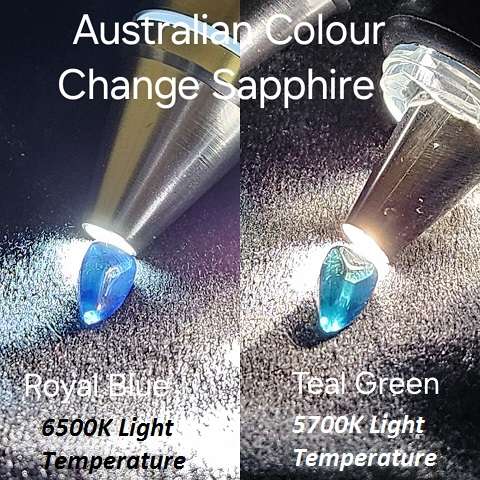
This colour change Sapphire displays a strong blue colour when exposed to Cool white light source of 6500K and then changes to a teal green colour when exposed to Daylight equivalent light at 5700K and outside daylight.
Identifying colour change in gemstones is a simple and exciting thing to do, as you may have owned a gemstone for many years and never realised its colour change potential, but once you see it happen for the first time you will be converted and a strong believer in the benefits of colour change gemstones!
Armed with the right tools and a basic understanding of what you are looking for to identify colour change in gemstones, will make identifying them a very simple and enjoyable experience.
I have personally been fascinated with colour change gemstones for many years and have devoted a lot of my time researching this topic and developing simple ways to identify them.
For those of you interested in reading additional articles on this fascinating subject, you will find a number of other articles I have written about colour change gemstones here:
So as you can imagine I became a bit of a collector these gemstones myself and I usually have a good variety of them available on the Gemrock Investments website should you wish to consider any of them for your own collection.
You can review our list of current gemstones on offer here:
You can also view our stock of calibrated gemstone flashlights here:
General Disclaimer:
Any information provided by Gemrock Investments is for informational purposes only, and does not constitute financial advice, either general or specific. You should assess whether the information is appropriate to your individual financial circumstances before making an investment decision.
Gemrock Investments are not financial advisors. You should always seek professional financial advice from your accountant or financial planner before making major financial decisions.
The information provided has been derived from research and sources believed to be reliable. However, no guarantee is expressed or implied as to their validity. Opinions included herein are subject to change without notice.
All investments involve different degrees of risk and you should be aware of your risk tolerance level and your financial situation at all times.
The gem market is speculative and unregulated and certification does not eliminate all risks associated with the grading of gems.
It is also important to remember that previous growth and returns demonstrated from gemstone investments are not an indicator of future growth nor is it intended as an offer or solicitation with respect to the purchase or sale of any security or gemstone.
Gemrock Investments may also own gemstones in areas they feature or discuss.
Gemrock Investments urges you to obtain professional advice before proceeding with any gemstone investment decision.
